ACCESSPATH
Access Path Drake
AccessPath is a research-informed campus wayfinding concept that helps users evaluate routes based on functional accessibility—not simply technical compliance. Developed from an embodied accessibility study with undergraduate design students, the project translates observed physical, informational and emotional barriers into more transparent and dignity-centered navigation.
Research Areas: • Accessibility and Disability Studies • Equitable and Inclusive Design
• Emotional Journey Mapping • Wayfinding and Information Design.
Role: Researcher, educator and designer
Methods: Accessibility walk, reflective writing, emotional journey mapping and research-through-design
Outcome: Mobile accessible-wayfinding concept
From Campus Experience to Emotional Journey Maps
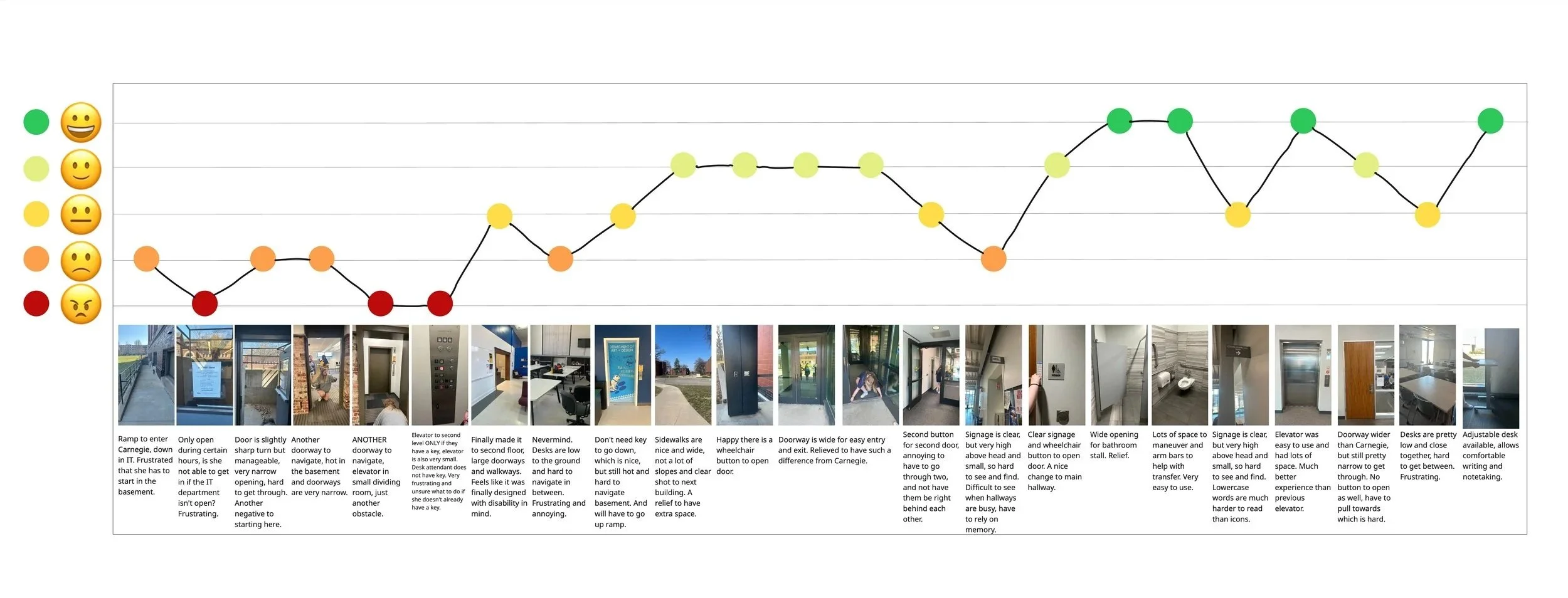
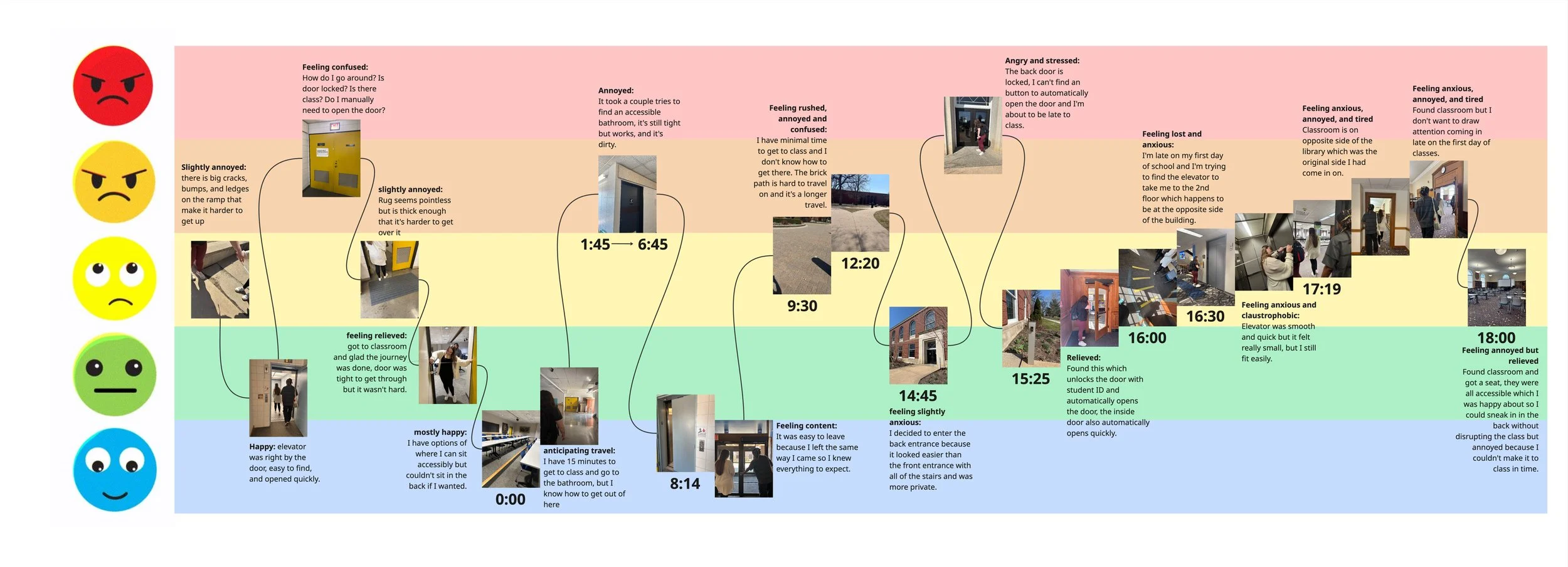
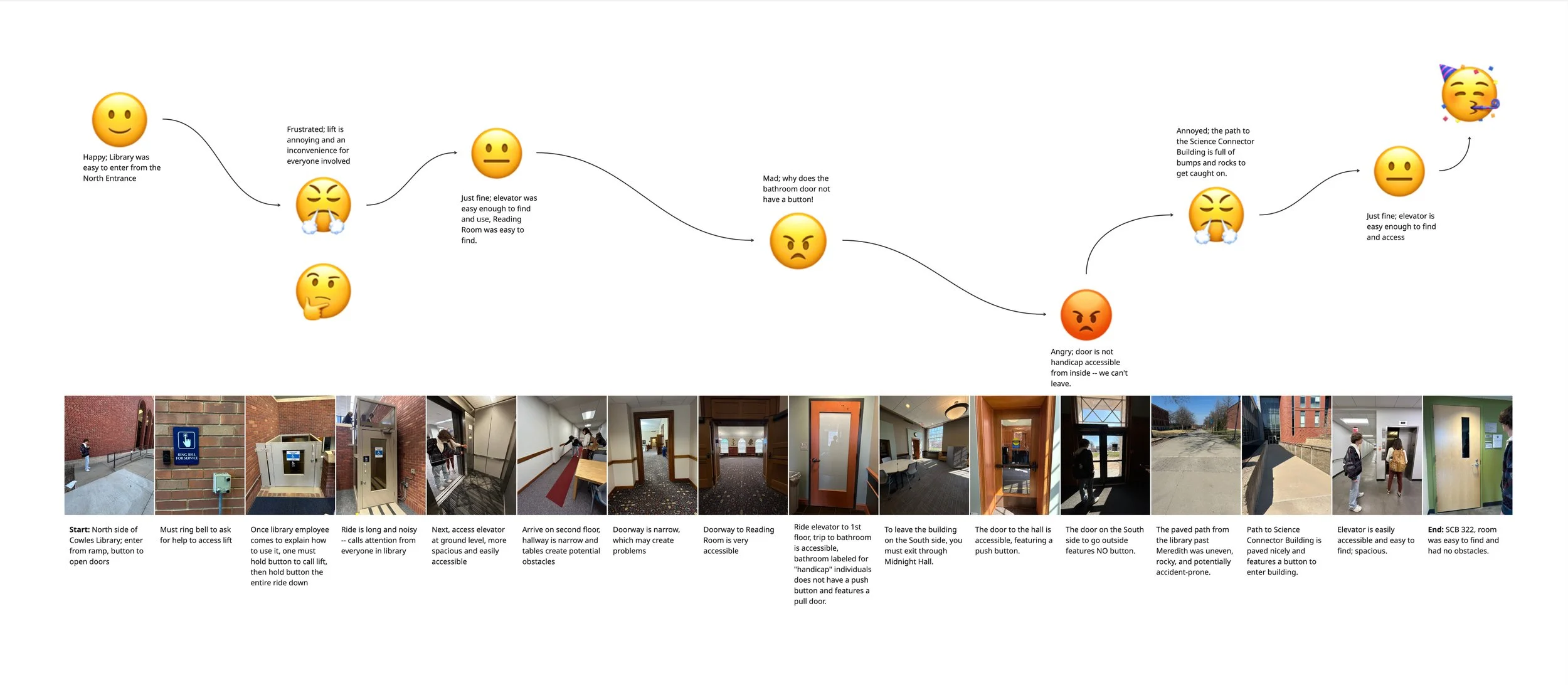
As part of an embodied accessibility activity I designed and facilitated, students navigated the Drake campus using mobility-based personas and documented physical barriers, wayfinding challenges, route conditions and emotional responses. They translated their observations into emotional journey maps that made the cumulative experience of campus inaccessibility visible. These anonymized student artifacts formed part of the research evidence that informed the development of AccessPath Drake.
Research Foundation
AccessPath grew from a studio-based accessibility study involving 20 undergraduate graphic design students. I designed and facilitated an embodied campus-navigation activity in which students used mobility-based personas to document route distance, physical effort, entrances, surfaces, signage and emotional responses. Students translated these observations into emotional journey maps, which I analyzed alongside their reflective writing.
Key Findings
Compliance did not always mean functional access.
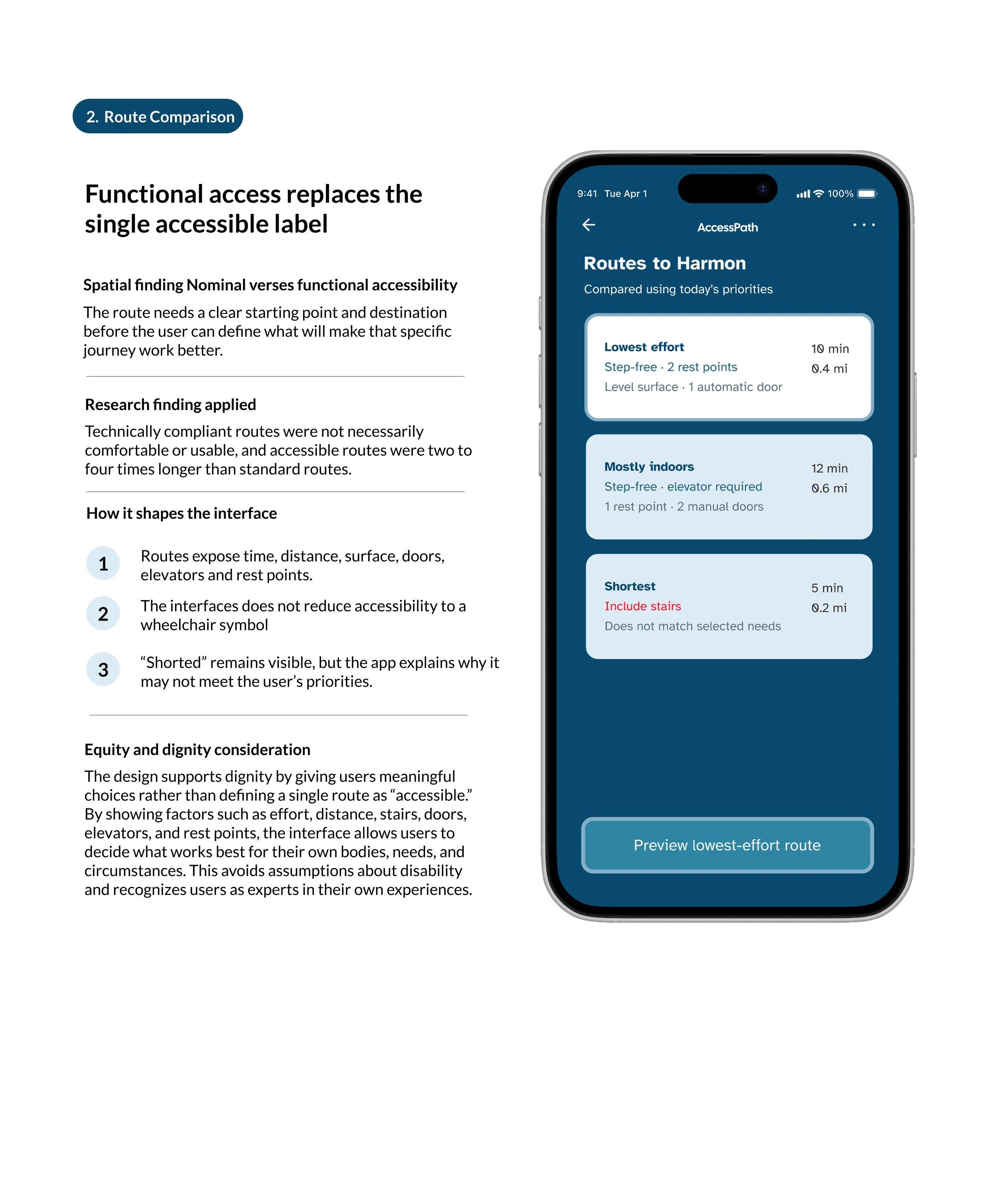
Technically accessible routes were sometimes two to four times longer and included difficult doors, unclear entrances and poorly positioned wayfinding information.
Small barriers accumulated across the journey.
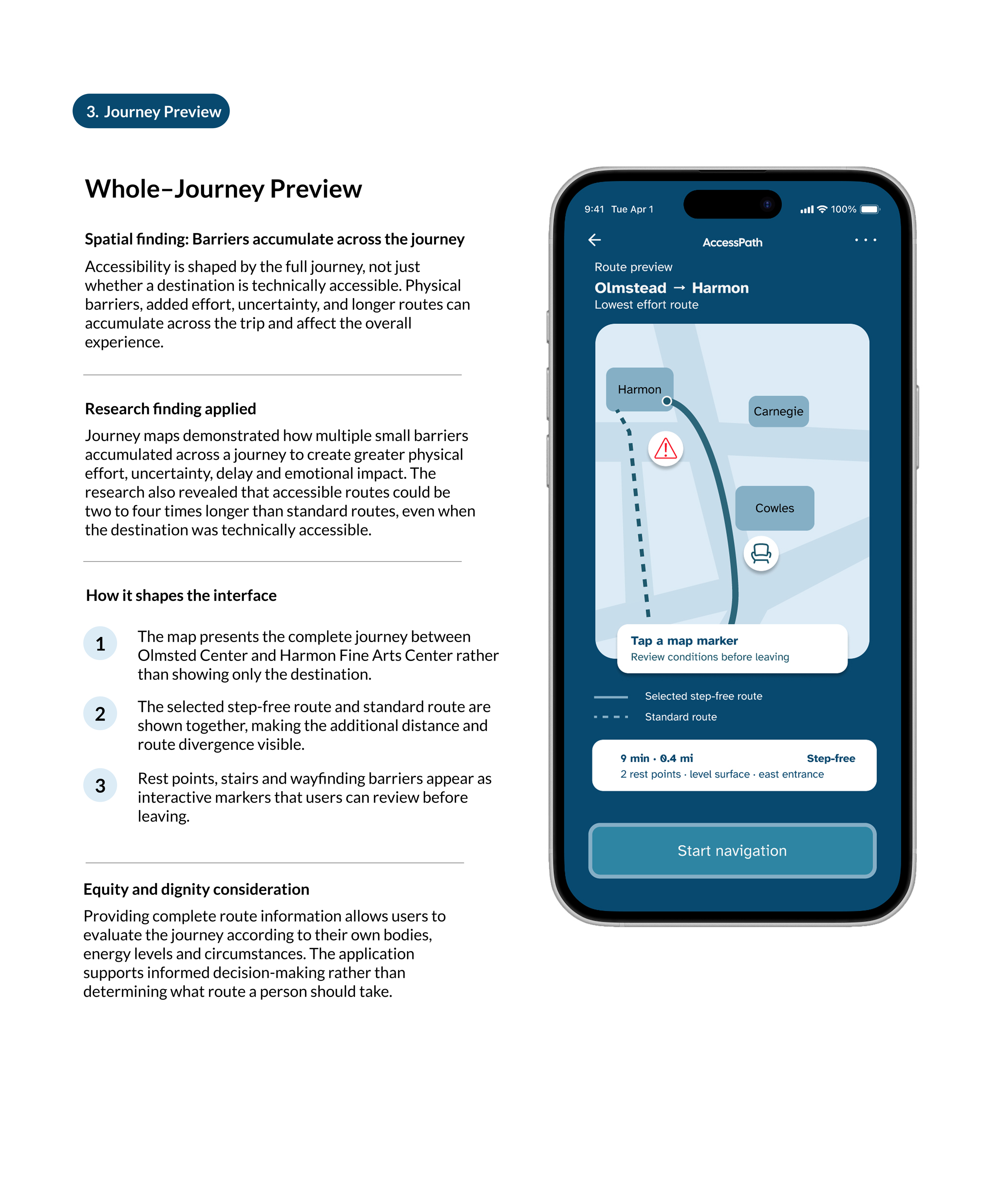
Missing signs, unexpected detours and limited rest opportunities collectively produced physical effort, uncertainty and exclusion.
Accessibility shifted from compliance toward care.
Students began to understand accessibility as a responsibility grounded in empathy, dignity and consideration for people’s lived experiences.
Student Created Emotional Journey Maps
Following the accessibility walk, students translated their observations into emotional journey maps that visualized the complete campus experience. The maps combined the sequence of the journey, physical route, environmental barriers, measurements and emotional changes experienced through each persona. By connecting spatial conditions with moments of frustration, uncertainty, effort and relief, students made the cumulative human impact of inaccessible design visible.
From Research to Design
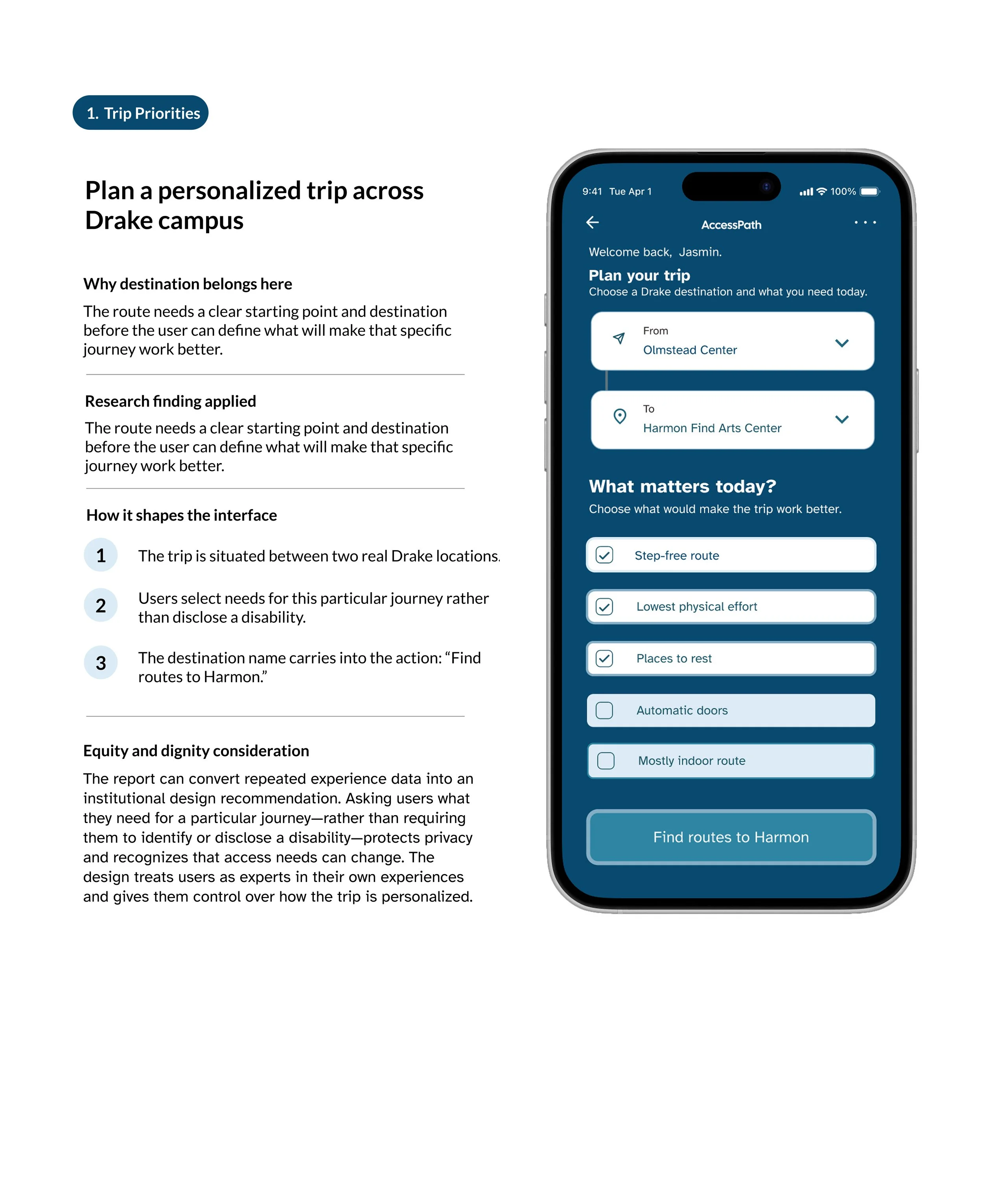
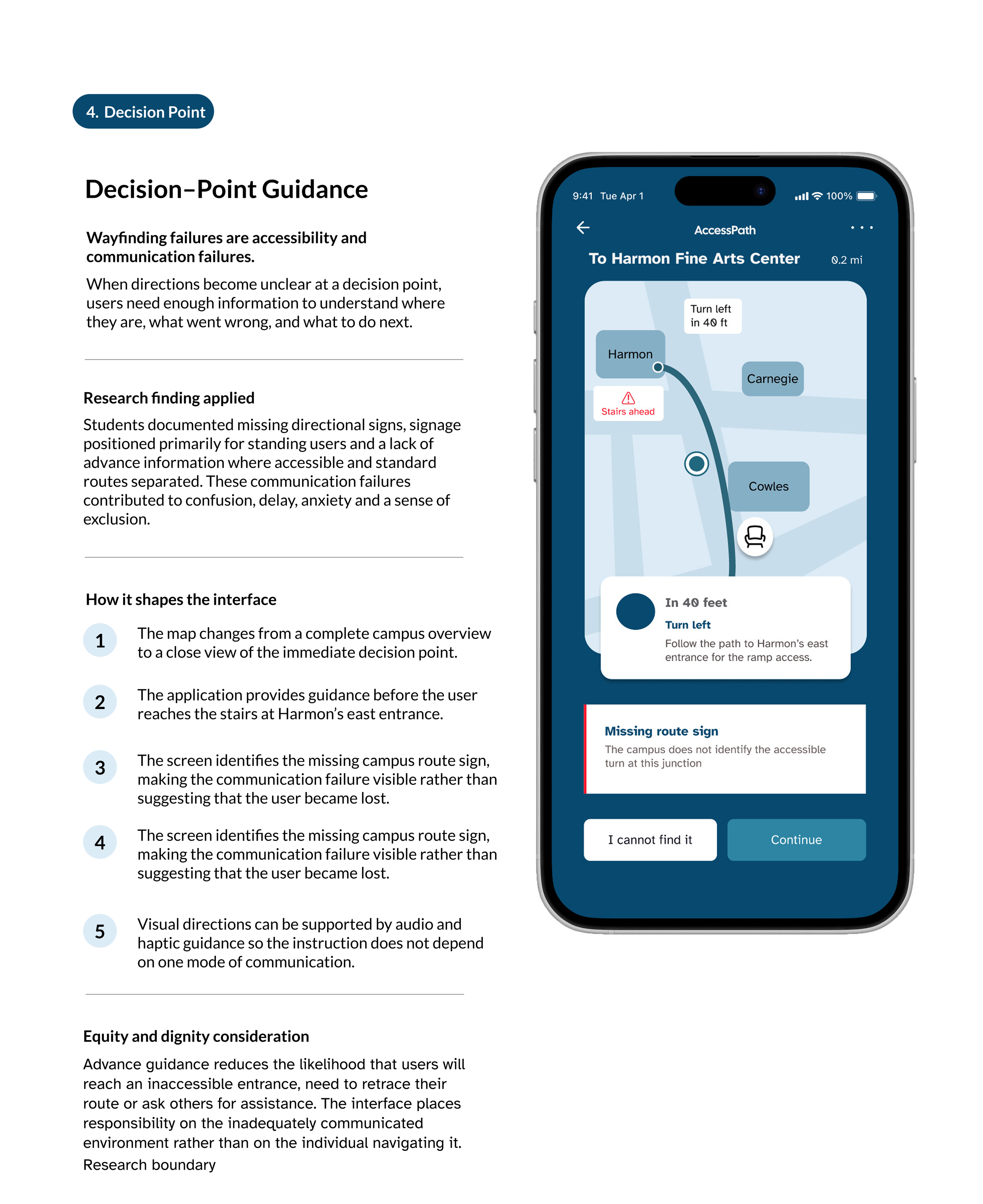
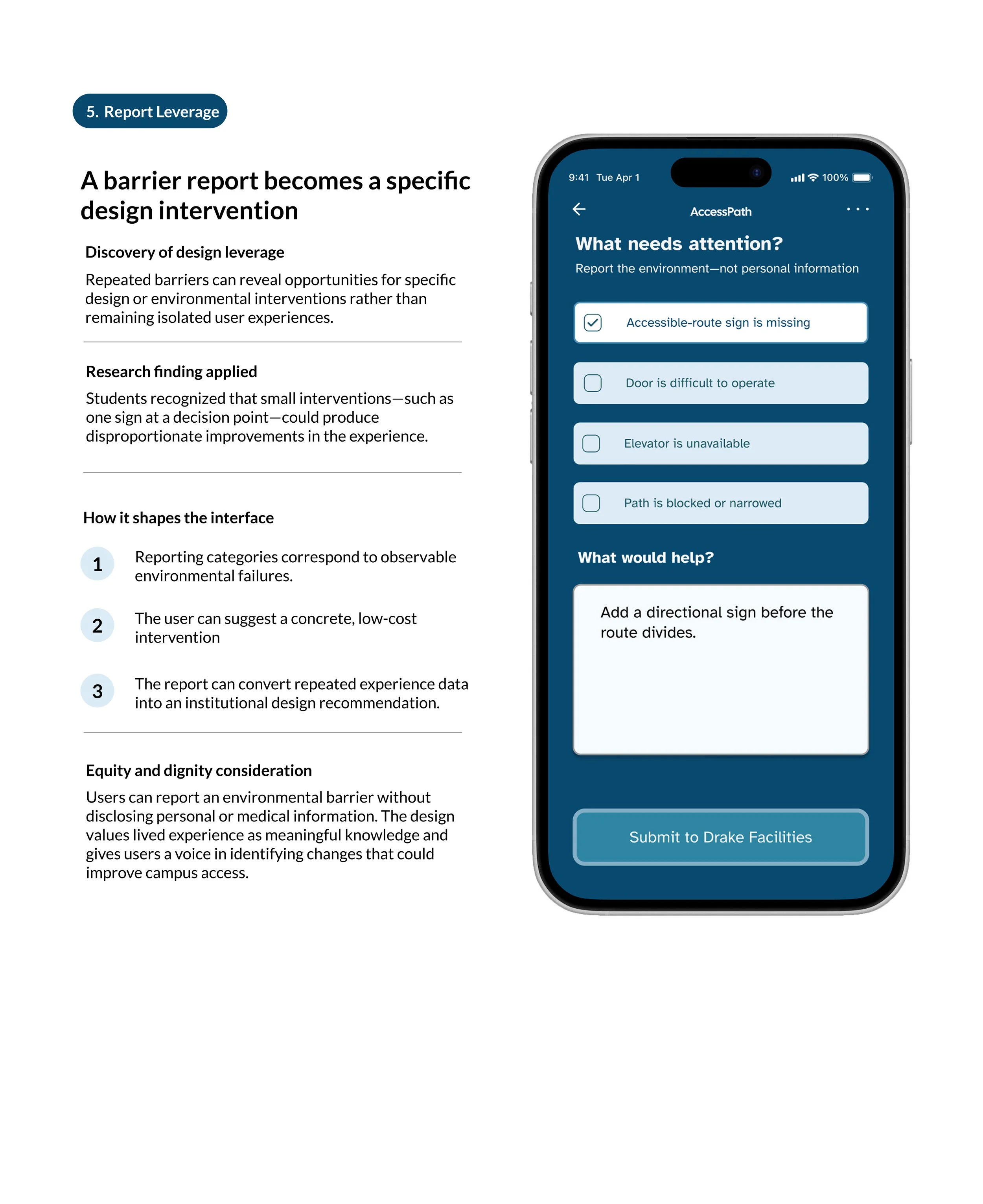
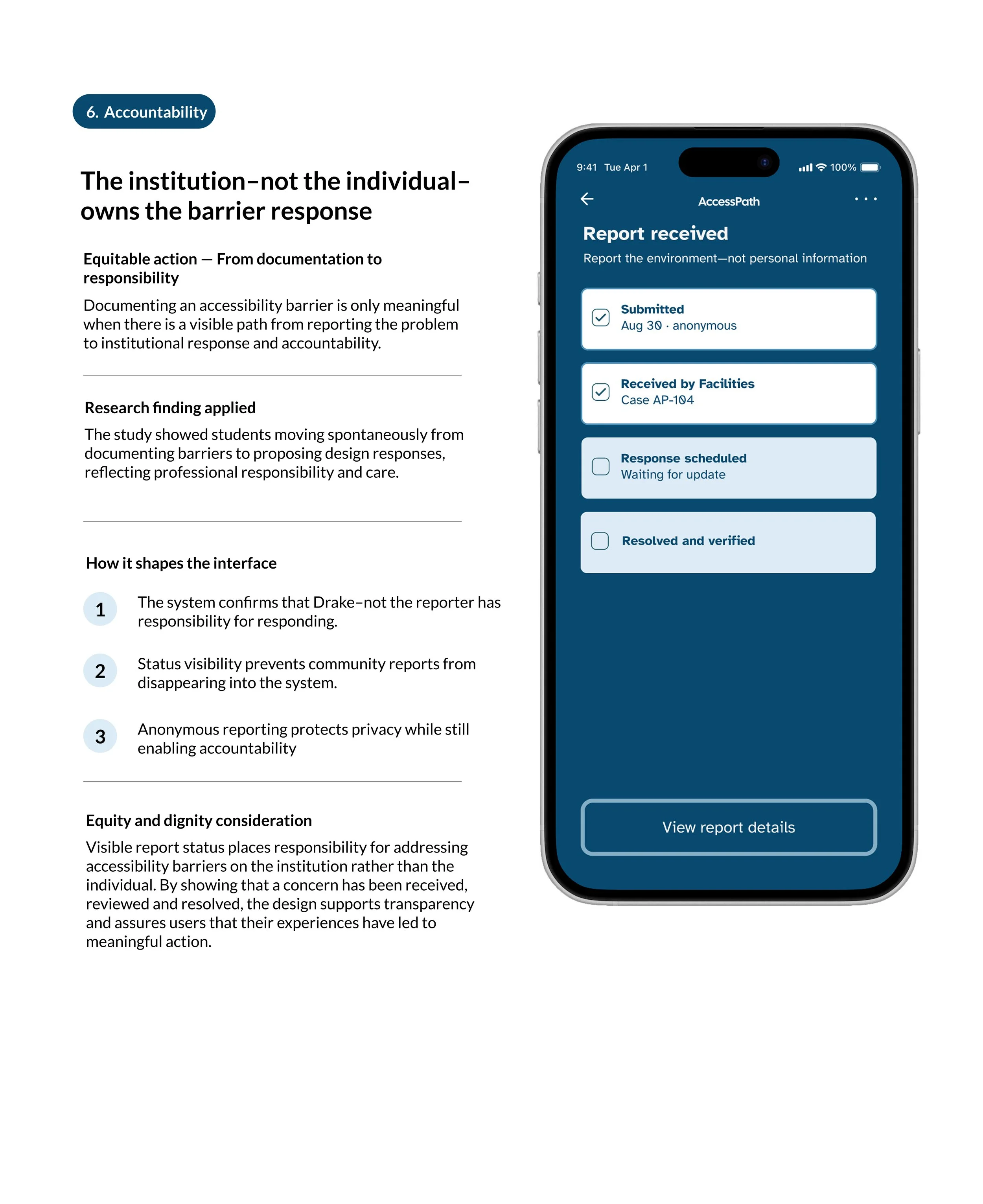
I translated these aggregated findings into the design requirements for AccessPath Drake. The application compares functional route conditions, previews cumulative barriers and provides guidance at uncertain decision points while protecting users’ privacy and decision-making agency.
AccessPath is a research-informed design concept rather than a validated solution. Co-design and usability testing with disabled members of the Drake community would be the next phase.
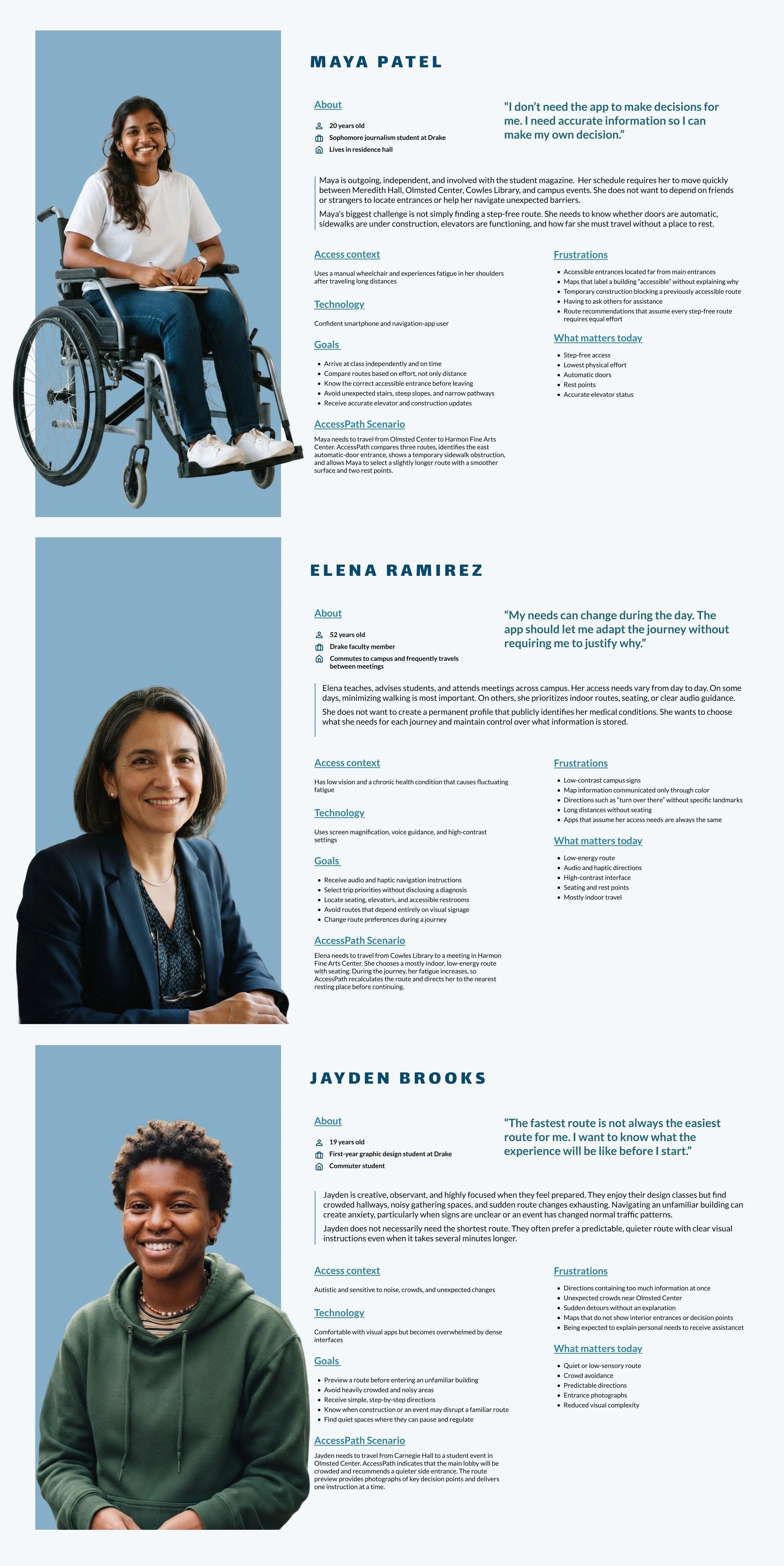
Defining the User Context: User Personas
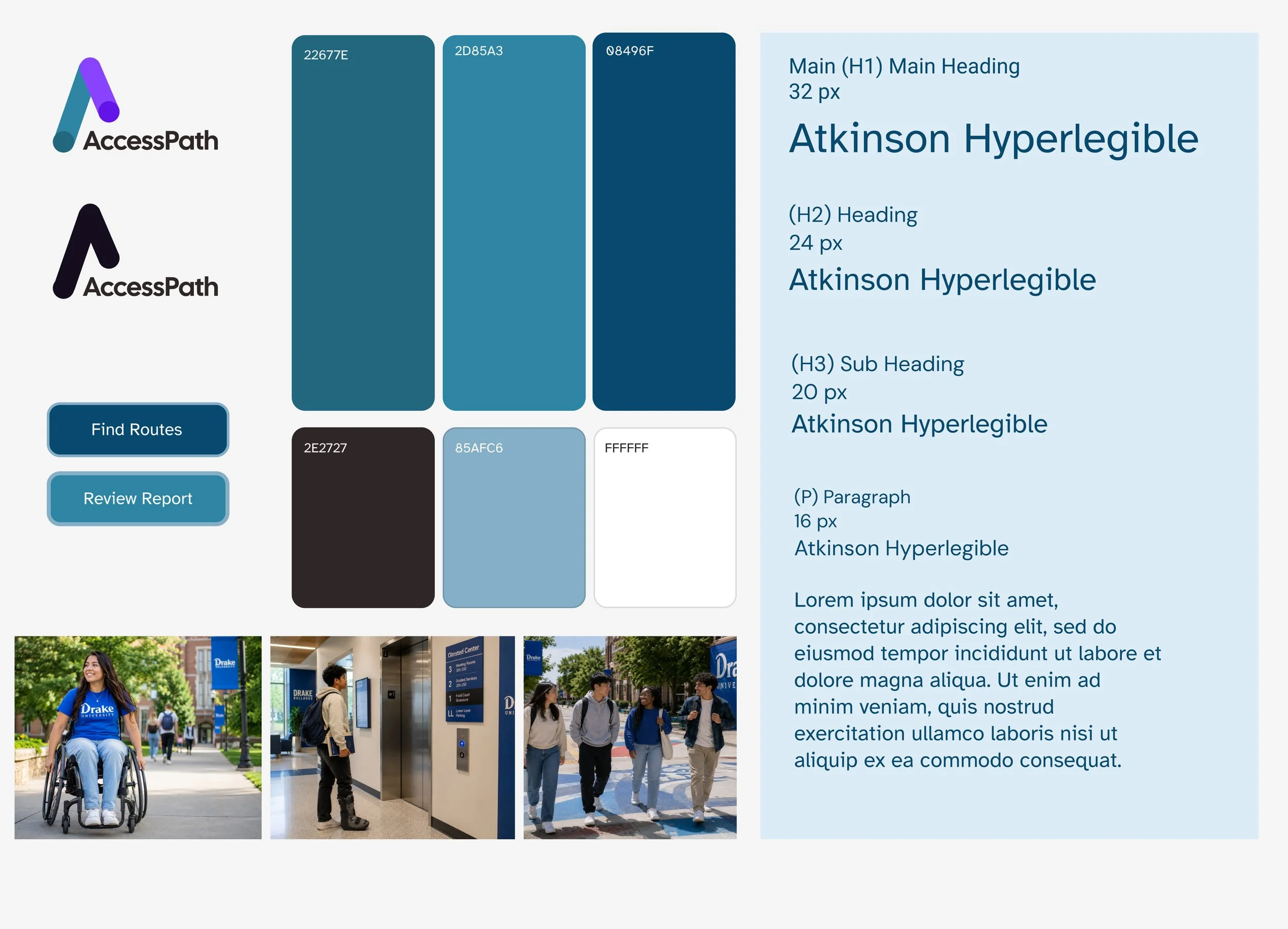
Visual System
Translating Findings into Interface Decisions