Inclusive Campus Mapping Through AR
ART154 Advanced Interactive Design | Spring 2026
How can augmented reality make campus environments more inclusive, accessible, and welcoming?
In this collaborative project, students explored how digital experiences can address physical, cognitive, and social barriers within Drake University's campus. Through site observations, user-centered research, and journey mapping, students identified overlooked needs and developed location-based augmented reality (AR) experiences using ZapWorks Designer.
Rather than approaching AR as a technology-driven solution, the project challenged students to consider how interactive design could improve access to information, reduce uncertainty, and foster a greater sense of belonging. Students translated their research into spatial interactions, connecting inclusive design principles with emerging technologies and real-world environments.
Spring Outdoor Activities at Drake
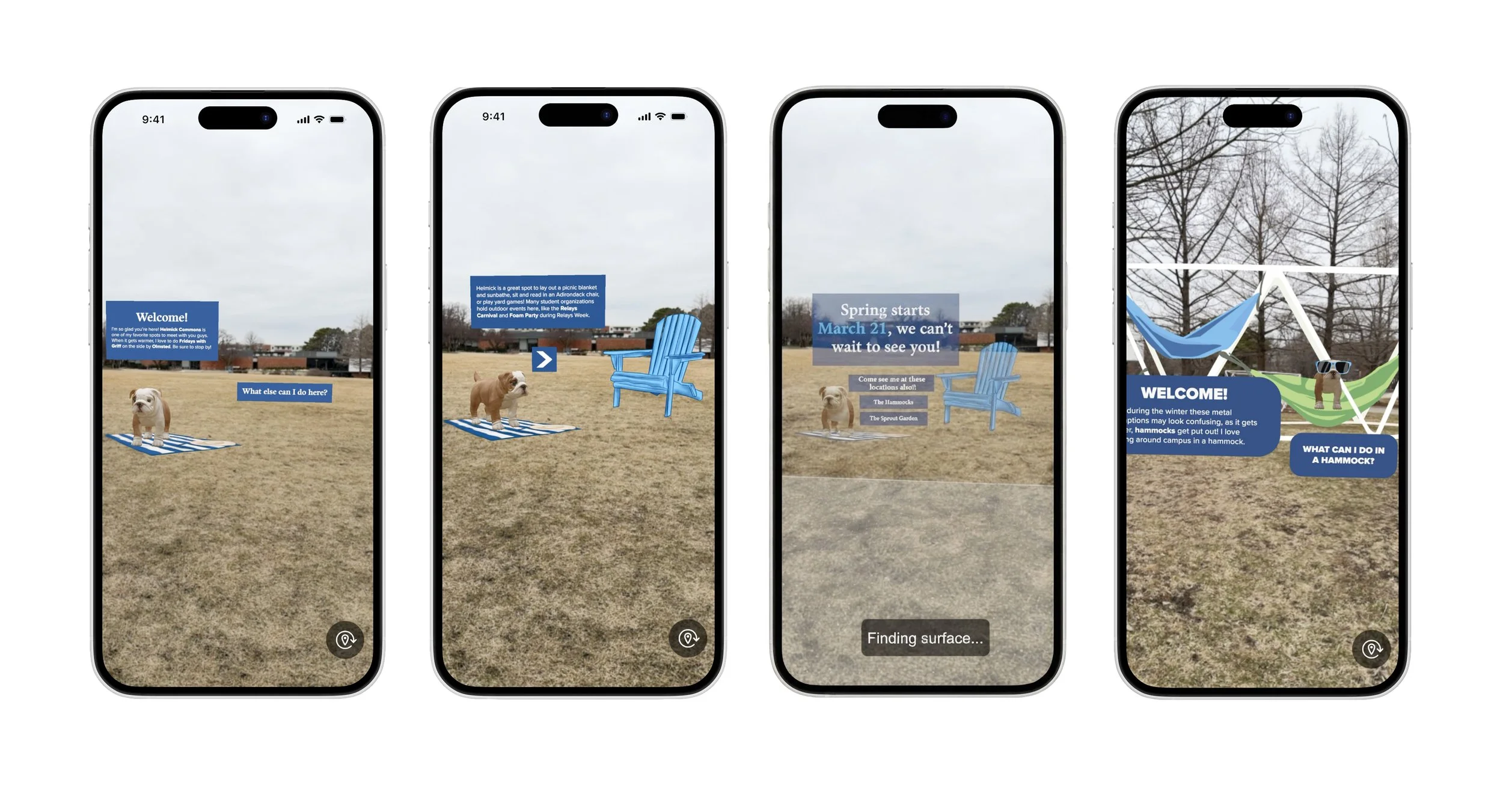
This student project explores how augmented reality can encourage students, particularly first-year and transfer students, to discover outdoor gathering spaces and feel more connected to campus life. The team identified locations for relaxation and social interaction, including hammock areas, Helmick Commons, and the Sprout Garden.
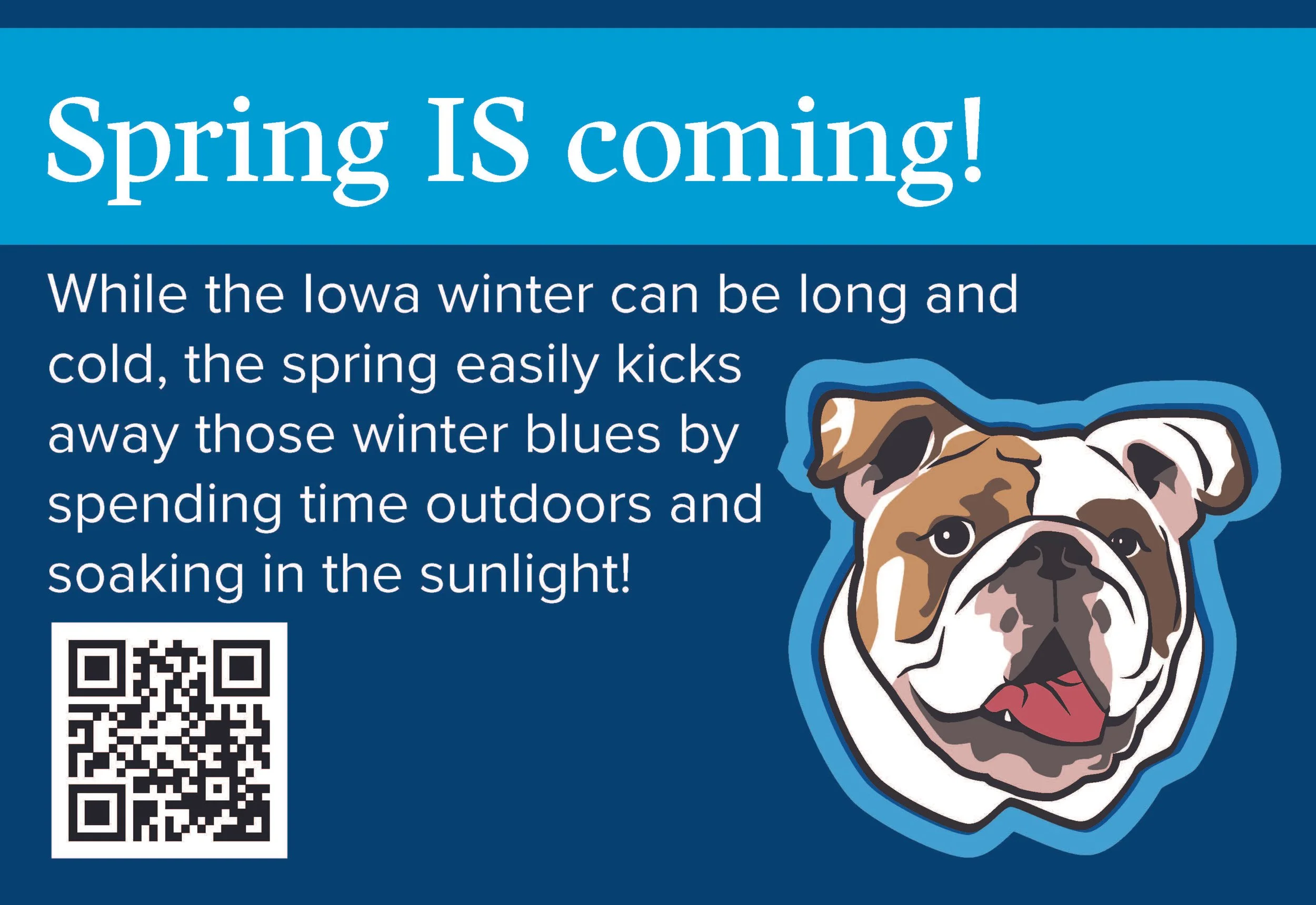
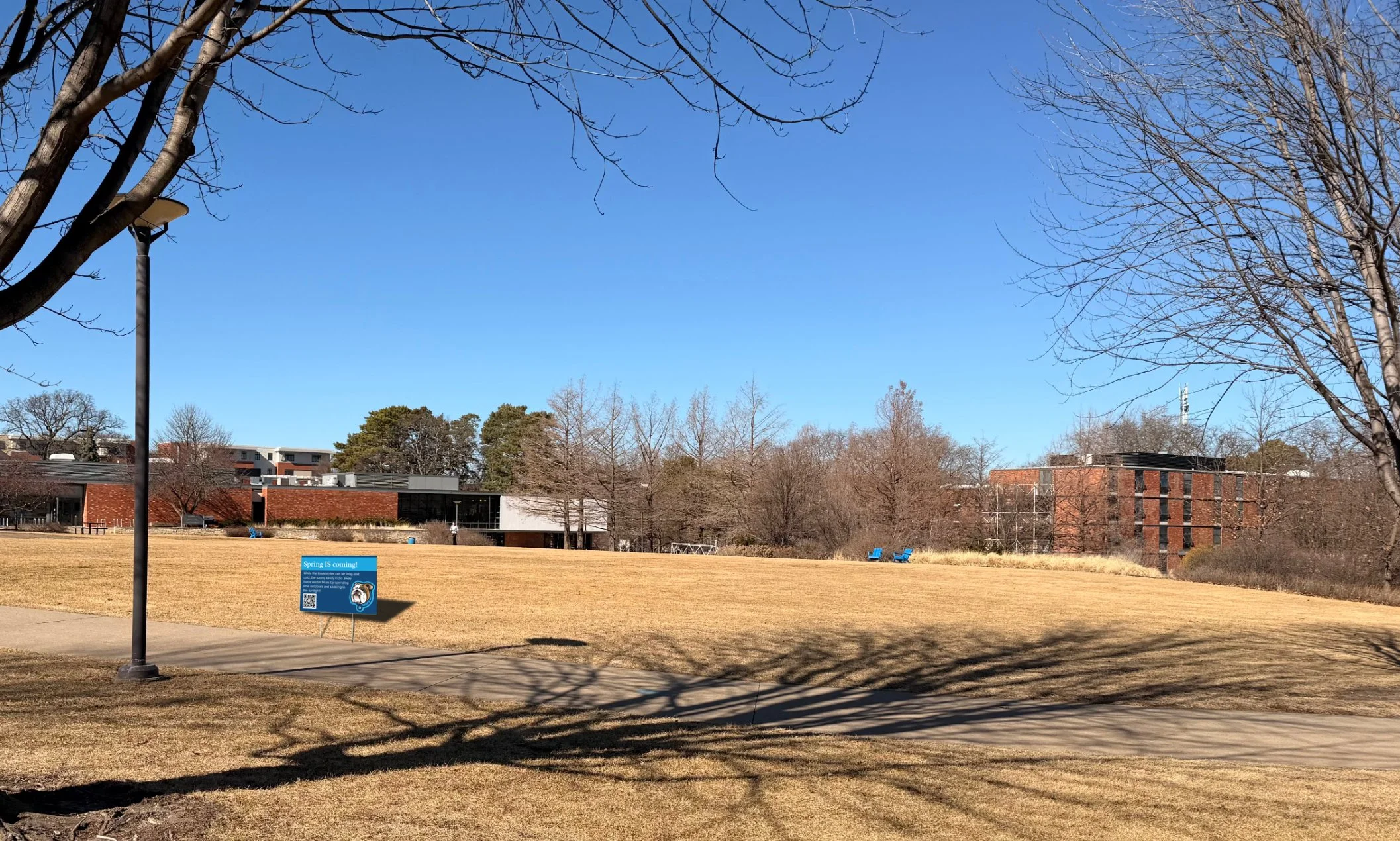
Using location-based AR experiences activated through QR codes, students designed interactive content to introduce these spaces, provide directions, and encourage outdoor activities. The project focuses on reducing uncertainty about where to go while fostering a greater sense of belonging and social inclusion.
AR-Enabled Yard Sign
AR Experience Screenshots
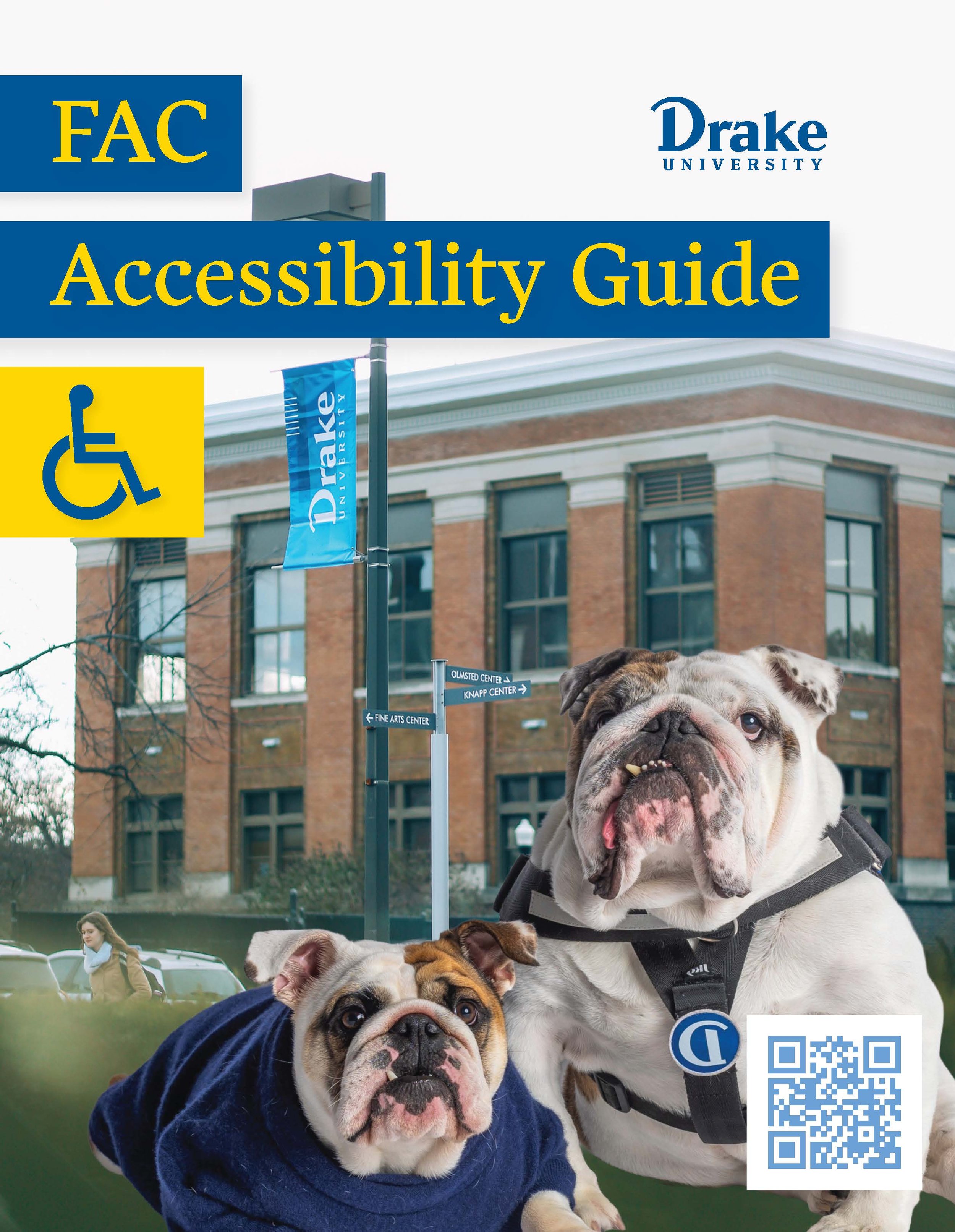
Campus Accessibility Guide
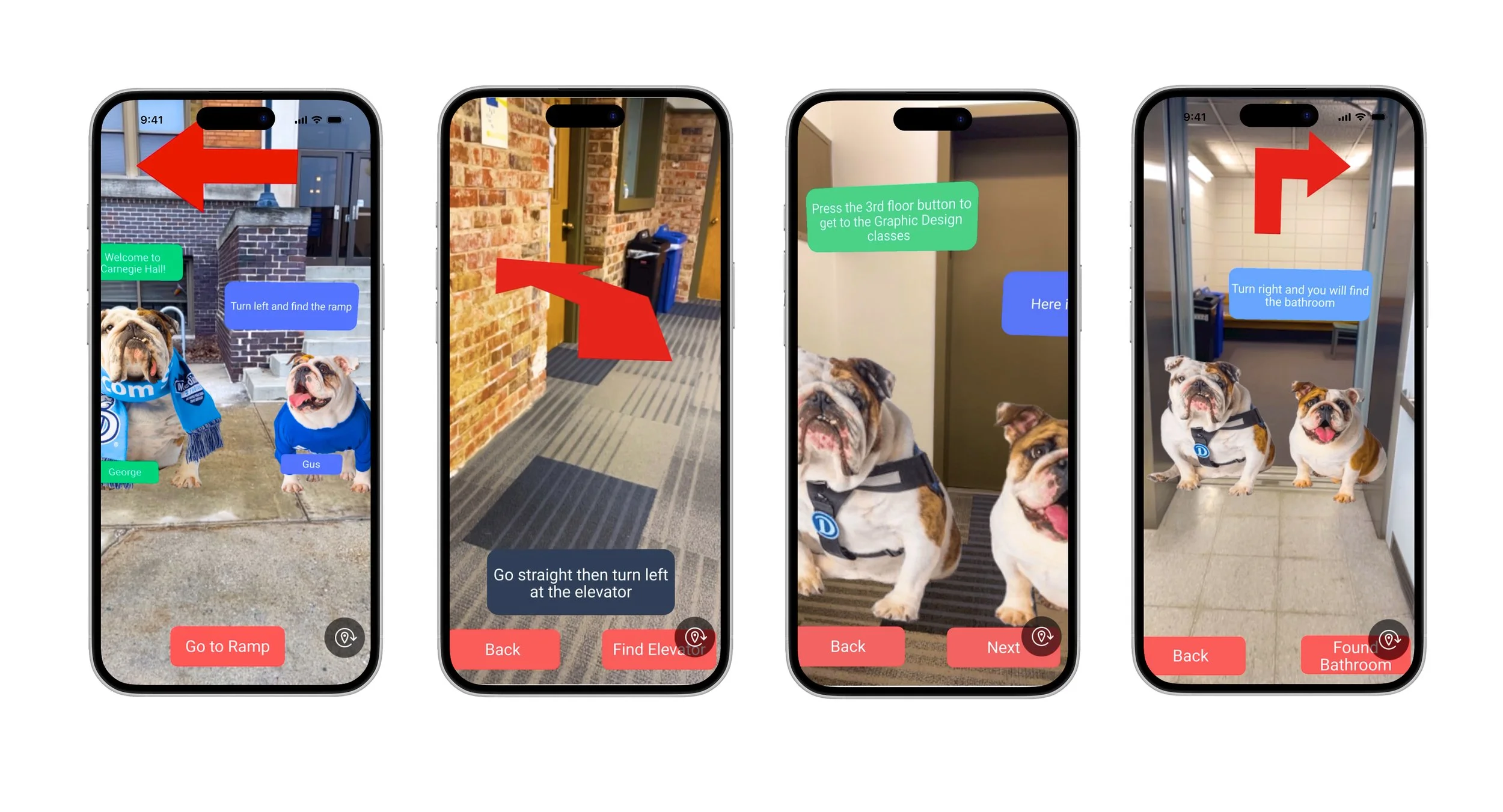
This student team developed an augmented reality (AR) accessibility guide to help students with mobility challenges navigate three buildings on Drake University's campus: Carnegie Hall, Meredith Hall, and the Harmon Fine Arts Center.
Through site observations, journey mapping, and user testing, the team identified potential barriers involving ramps, elevators, restrooms, and confusing building layouts. Using ZapWorks, students created interactive AR navigation experiences featuring directional arrows, visual guidance, and information about accessible routes.
The project aimed to reduce navigation difficulties and help students move through campus buildings with greater confidence and independence.
AR-Enabled Accessibility Poster
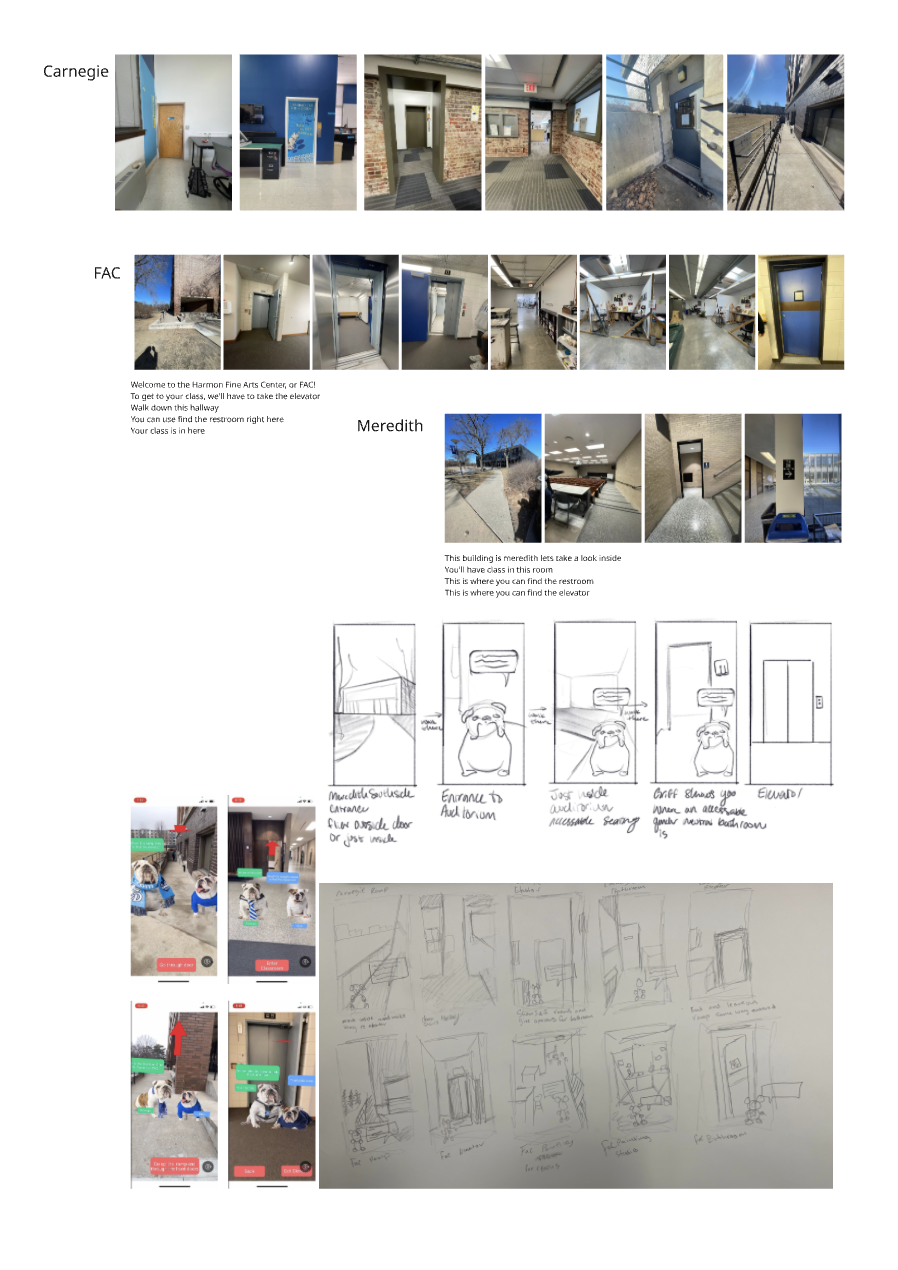
Research & Site Documentation
AR Experience Screenshots